Literacy
Learn about how literacy underpins all our academic learning.
At HGS, within our aim of providing an excellent all-round education for our students, literacy is an inherent aspect of every part of our students’ school journey. Fostering a culture of literacy school-wide, and, more specifically, across subject disciplines, is our shared objective to drive academic achievement and personal success.
Since our core values are Respect, Responsibility and Excellence, the intent of our Literacy Curriculum at HGS embodies these elements to ensure that all students have equity in their literacy learning, providing all with opportunities to develop literacy skills and aspirations. Not only do we provide structured and consistent experiences of literacy development in the classroom, but our extra-curricular offer, and events across the year, promote a love of all things literacy based.
Strands of Literacy and Implementation at Heckmondwike Grammar School
| What does this strand entail? | What does this look like at HGS? | |
| Reading – Development | Reading is a fundamental to education (Department for Education, 2022) and is a cornerstone of literacy development therefore it must be intricately shaped through the understanding of vocabulary, word recognition, sentence structures and rules in order to build fluency and confidence in reading.
At Heckmondwike Grammar School we take a range of steps to support the development of standard reading skills, as well as promoting wider pleasurable and academic reading in all disciplines. |
We:
|
| Reading – For Pleasure | The end goal is not only that students are able to read more assuredly, but that they have a desire to read for pleasure and a drive to further develop their knowledge and hone their reading skill.
Reading for pleasure is a large part of the student community at Heckmondwike Grammar School with The Library acting as a central hub for the fostering of a love of reading. |
|
| Vocabulary | Research consistently finds that the extent of a child’s vocabulary knowledge relates strongly to their overall academic success (Cambridge University Press, 2019). Thus, at Heckmondwike Grammar School we are constantly seeking ways to introduce, develop, reconsider and utilise vocabulary more effectively in all areas of the curriculum. |
|
| Writing | Writing is a cognitively demanding process which relies on a person’s ability to manage a range of skills simultaneously. This includes: transcriptional elements such as handwriting, spelling and typing; compositional elements such as developing knowledge of writing rules; and executive function skills such as planning and managing the construction of writing.
At Heckmondwike Grammar School we pride ourselves on providing students with the correct tools to be able to effectively construct a piece of written work, across disciplines. Having subject specialists across the school allows a breadth of knowledge to be passed on to our students and to encourage writing success. |
|
| Oracy | Developing a child’s capacity to use speech to express their thoughts and communicate with others (Alexander, 2012) is absolutely essential within education.
Oracy is not something that is innate or natural and therefore students must be provided with a toolkit of talking skills in the same way that their writing and reading skills are developed (Voice 21, At Heckmondwike Grammar School, we are currently in the process of developing our oracy strategy, supporting our students to be the individual that stands out from the crowd in their speaking and presentational delivery. |
|
World Book Day
In recent years, World Book Day has become a flagship event for HGS in supporting the development of literacy and a love of reading. We have hosted a wide range of events throughout World Book Day week that inspire and encourage the reading of books of all kinds in order to foster our students’ love of reading for pleasure.
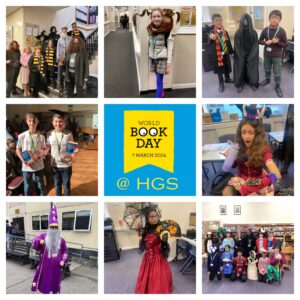
Some events we have hosted include:
- Jackanory-style fireside reads events where students volunteer to read a section of their favourite book under a (computer-generated and highly controlled) roaring fire.
- Author visits – 2024 saw HGS alumni Nikki Young deliver talks and workshops for KS3 students to discuss her inspiration for becoming an author, as well as processes for producing her own works.
- A whole-school fancy dress catwalk House competition, where students dress as a book character for the day and parade their outfits for the judges.
- A whole-school murder mystery-style book hunt named ‘The Case of the Stolen Book’ where students have to figure out which of a possible 15 books has been stolen.
Lexia® PowerUp Literacy® 
Students who are identified, through a standardised reading test, as having a reading age significantly below their real age are entered into an intervention program supported by a provider called Lexia®.
Lexia® PowerUp Literacy® is a computer-based program that tailors intervention to the needs of individuals based around three key areas: word study, grammar and comprehension. The program provides students with their own login and, following an initial assessment, places them in the system according to their current literacy ability. Once in the system, students gain access to an exclusive range of activities and resources that are outside of the teaching curriculum offered in school. Students are expected to complete tasks associated with their placement in both scheduled form-time sessions as well as independently, so that staff members can monitor their progress and provide support where they may need it.
Lexia PowerUp Log inHome use outline – PowerUp Home Use Letter
The Library and its Resources
LibraryThe library at HGS not only has physical copies of more than 20,000 books, but also provides access to a vast number of online resources and libraries for students to use.
My CirqaMy Cirqa connects students to their library account so that they can search for books, see what they have borrowed, and reserve future lends. The online resources system offers a whole host of systems for students’ perusal including magazine, photograph and newspaper archives, journals, and e-book platforms.
ResourcesStudents can visit the library to speak with Mrs Whitelaw, Mrs Bourne or Mrs Firth who would be more than happy to support with finding the perfect read, or suggesting a supplementary academic source.
7 Top Tips to Support Reading at Home
Recommended Reading Lists